9.24.2008

2.25.2008
Republicans and fiscal discipline
 To secure any change in how the United States is governed, two branches--the Legislative and Executive branches must work hand-in-hand. Not to be insulting but just as a quick primer for those not awake during high school civics class, Article I Section 1 of the Constitution of the United States reads that, "All legislative Powers herein granted shall be vested in a Congress of the United States, which shall consist of a Senate and House of Representatives." Further on, Article II Section 1 of the Constitution states that "The executive Power shall be vested in a President of the United States of America." So the legislative branch = Senate + House of Representatives (Congress), and executive branch = President.
The purpose of the legislative branch is outlined in Article I Section 8, and in brief, the responsibility of Congress is to lay and collect Taxes, Duties, Imposts and Excises, to pay the Debts and provide for the common Defense and general Welfare of the United States, borrow Money on the credit of the United States, declare War, and make all Laws which shall be necessary and proper for carrying into Execution the foregoing Powers, and all other Powers vested by this Constitution in the Government of the United States, or in any Department or Officer thereof.
The President of the United States is responsible for signing or rejecting bills into law (Article I Section 7), act as Commander in Chief of the armed services (Article II Section 2), and enforce the laws of the United States (Article II Section 3).
The Republican party controlled both the Senate and the House of Representatives, the entire legislative branch, from 1994 until 2006, when the Democratic party took control by slim margins. Since the disputed 2000 election when Bush edged out Gore to win the Presidency, the executive branch has been in the control of the Republican party. The Republican party has recently controlled both branches of Congress for 12 years and simultaneously controlled the executive and legislative branches for 6 years, so how does a party which runs on a platform which includes fiscal discipline (see page 46 of the RNC platform, just after "War on Terror" and Lower Taxes) measure up?
The Republicans have a history of failure by any measurement when it comes to fiscal discipline. The federal debt is up 92% since the Republican "Revolution" in 1994, and it's up 62% since George W. Bush became President (see chart above). Actions truly speak louder than words.
Wonder why I'm supporting Senator Barack Obama's candidacy for President? He has a proven record of supporting PAYGO (pay as you go) federal budget rules.
1.17.2008
I love paying federal taxes
 Am I insane? Perhaps, but my insanity doesn't stem from an appreciation of our convoluted tax laws. No, those convoluted tax laws enabled me to have an effective tax rate of just 1.36% for 2006. In fact my taxes (both dollars paid as well as the tax rate itself) were higher 15 years ago than they were last year.
Under our watch, our federal government has racked up a national debt of $9,190,316,700,166.26 as of this morning, which equates to a debt of $30,305 for every man, woman, and child in America. Our representatives are not balancing our federal budget, and federal spending continues to rise. So paying this low of a tax rate scares me, and I'm not alone.
Last year Warren Buffett made news when he suggested that, "The taxation system has tilted toward the rich and away from the middle class in the last 10 years. It's dramatic and I don't think it's appreciated, and I think it should be addressed." To make his point, he surveyed employees in his office to compare tax rates. Warren found that his total taxes paid (FICA + federal income tax) came to 17.7% vs. an office average of 32.9%, and he paid the lowest tax rate.
For those who think I'm a bleeding heart liberal, here are my politics: I'm for limited government, an equitable tax structure, diplomacy over bombs, and paying off the debt along with balancing the budget. My concerns regarding taxes/tax rates are that they are not equitable and not enough tax income (to the government) is being generated to pay down the national debt.
3.15.2007
FREE TaxCut Premium Federal + FREE DeductionPro
 With apologies to my non-U.S. readers, through a promotion with travelocity, H&R Block is giving away its TaxCut Premium Federal along with DeductionPro software for free [all credit goes to slickdeals.net for identifying this offer].
Those readers living in Alaska, Florida, Nevada, South Dakota, Texas, Washington, and Wyoming (all states with no state income tax) should have few reasons to buy tax software this year. The same goes for those in New Hampshire and Tennessee since you only pay state tax on dividend & interest income.
2.04.2007
Reduce taxes by fighting your property appraisal
Until this past week of winter temperatures, it almost felt like spring was in the air. As in many states, each spring in Georgia is met with the arrival of flowering quince, birds singing, and the dreaded local tax assessor's annual Statement of Appraisal for Residential (and commercial) Property. These statements are used as the basis for calculating property tax for every piece of property, and in my experience, municipalities are becoming more and more aggressive in boosting appraised values to increase revenues from property taxes. Rather than falling into the usual routine of filing this document with your mortgage statements, I'm going to challenge you to appeal this year's appraisal in an effort to reduce your property tax bill.
In years past, fighting your tax appraisal (and therefore your tax bill) required access to tools only available to real estate agents, appraisers, mortgage brokers, and those willing to spend a lot of time digging through real estate filings in the county courthouse. Those days are gone. With tools like Zillow's semi-nationwide Zestimate coverage (thank you for finally providing data on metro Atlanta!!), ShackPrices, HomePriceMaps, and HomeRadar, there is no reason to be ignorant of the value of your home. Information is power, and in this case, information can = money in your pocket.
The first step upon receiving the tax appraisal is to read it thoroughly. Read it again. Each tax appraisal should offer several pieces of information: 1) the appraised value, 2) the process for appealing this appraised value, and 3) the deadline for filing this appeal.
For my county, the process is simple: I need only provide a written statement that I wish to appeal the appraised value, and this written appeal must be postmarked within 21 days of the date of the tax appraisal statement. This appeal is one of the annual rites of spring. The appeal costs me nothing, and the worst case is that my assessed value remains the same; in the best case I get a significant reduction on my property tax bills. The steps and process I'm going to describe are specific to Georgia, so please be mindful that this process and corresponding deadline will vary by state, county, and/or city.
Once the appeal has been filed I wait for the county's response, but while waiting I am also gathering information. As a real estate investors with multiple properties, thousands of dollars are on the line, so I'll use Zillow and the other tools referenced previously to help determine the fair market value of my homes. In addition, I'll compile a list of between 5 and 7 properties that have recently sold to serve as good comparables. If you've recently refinanced your home and paid for an appraisal, you can add this to your quiver if it's to your benefit or at least study the comparables from your paid appraisal to see if they would help your argument.
A couple of months later I receive a letter acknowledging my timely appeal along with an optional worksheet to complete and remit to my local Board of Tax Assessors (hereinafter, "Board"). The key word for this worksheet is "optional". The letter also advises that the Board will review all information in 30 days and respond in writing within two weeks after said review. Included in the worksheet they provide is a summary of the characteristics of my property along with a request to verify the accuracy of these characteristics and to provide additional information to support my appeal. If the characteristics of the home reflect less square footage than the home actually has or there are any details which, if corrected, would actually hurt your argument for reducing the appraised value, I would advise against completing this worksheet.
If you wish to avoid the chance of appearing before the board in person, you may choose to complete the optional worksheet or respond in writing with a detailed explanation of why you believe the tax appraisal is too high and provide supporting evidence, and by all means, include your list of comparables.
I've found success by not completing the worksheet and not responding at all. This works best when the home was recently purchased for much less its tax appraisal. Last year I had a tax appraisal reduced by $50,000 in this way. In other cases I've found success by completing the worksheet and providing a detailed explanation as to why the tax appraisal was too high.
While I've yet to encounter them, the Board of Equalization is the means of last resort if all else fails. They hear all appeals should the Board of Tax Assessors not rule in your favor.
In my years of appealing tax appraisals, the Board has always reduced the appraised value when I follow the procedures and complete items by their respective due dates. I've become much more systematic in my approach to this process as the times I've not had a change in the tax appraisal are always due to either failing to follow procedure or simply not completing paperwork by a deadline.
Please let me know your experience!
1.23.2007
Ben Stein is wrong about Real Estate Investing
Ben Stein is an incredibly smart guy. You might know him by any one of these titles: actor (he was the boring economics teacher in Ferris Bueller's Day Off), host of Comedy Central's show "Win Ben Stein's Money", author of 16 books, speech writer for presidents Richard Nixon and Gerald Ford, or university law professor. Ben also writes a financial column every other Monday at Yahoo! Finance, and it's usually full of sage advice. This week's article "A Home Truth about Real Estate Investing" was an exception.
As a part time real estate investor, the title of this week's column caught my attention. I was teased by the short description which reads, "Owning real estate brings great joy and even makes a good investment. For long-term gains, though, stocks are better." I was dumbfounded. I've owned stocks & mutual funds for 15 years, but the returns on my investments in several single-family rental properties have beaten my returns in the stock market, hands down. Could I be a smarter real estate investor than Ben Stein? This fleeting thought was unfathomable, so I read on.
It was only after completely reading his column that I realized the source of my disconnect: I can't recall ever hearing an economist, particularly one who is a "commentator on finance", consider the purchase of one's own domicile to be real estate investing. Mr. Stein's article does a disservice to the practice of real estate investing, which most consider to be the act of acquiring real estate for purposes of generating rental income or profit from resale after capital appreciation (my definition). My own real estate investing has delivered consistent positive cash returns each year, not to mention the huge tax benefit in being able to offset rental income with that most wonderful non-cash expense, depreciation. Once rented, without exception, each property has been cash flow positive while consistently showing a tax loss because of depreciation and section 179 expenses.
Considering his argument for a moment, however, I would challenge Mr. Stein to look at the alternative to purchasing a house/condo. I see a flaw in his logic because buying stocks on broad indexes isn't the alternative to purchasing a house/condo to live in; renting a house/condo is the alternative! I'm fortunate that I don't live in an expensive real estate market (metro Atlanta), but even still, I can't see how, with tax considerations, buying a house is less "profitable" than renting.
And on the topic of real estate, today I learned that Zillow has just begun providing Zestimates for many homes in metro Atlanta!
1.21.2007
Give to God what is God's... but get a receipt
Today the freemoneyfinance blog addresses the subject of how to calculate a 10% tithe. Reading it reminded me of something I've noticed the last couple of Sundays at church during offering. While a large number of people write checks, there are plenty of others who still place cash in the offering plate (bucket).
Unless it's in an envelope with the giver's information or donated in some way that the giver can immediately receive a receipt, I find donating cash to a church or any charitable 501(c)3 foolish because such donations are not tax deductible. Understand that I have an accounting degree, so my brain is wired differently than most, but I believe in giving unto Caesar what is Caesar's... and not a penny more. When giving to God, I want the tax deduction.
In case you're wondering, I never put anything in the offering plate. I seldom carry cash or checks, so fortunately North Point Community Church offers scheduled ACH withdrawals which I use and like.
12.28.2006
To convert or not to convert?
 For the last several years I've considered rolling my traditional IRA into a Roth IRA, but laziness, indifference, and an abundance of more important things to do than spending time calculating the tax implications of such a move always pushed this activity to the bottom of my list.
This year I have no excuse. And if I did, Jonathan at MyMoneyBlog has again reminded me.
With consideration to the other excuses, time is the main thing that has kept me from acting. It's a pretty cumbersome task to manually calculate whether this is a smart move given the multitude of variables. Well, thank God for the Internet! I Googled "to convert to a Roth IRA or not?" and found this terrific calculator.
I will have to pay ordinary federal income tax on the value of the IRA to be converted, but with some pretty conservative estimates (of my future investment return + a wild-ass guess at what my retirement tax rate will be), it clearly makes sense to convert. Tomorrow is the deadline, so I'll be stopping by Scottrade tomorrow.
10.16.2006
Death and Taxes
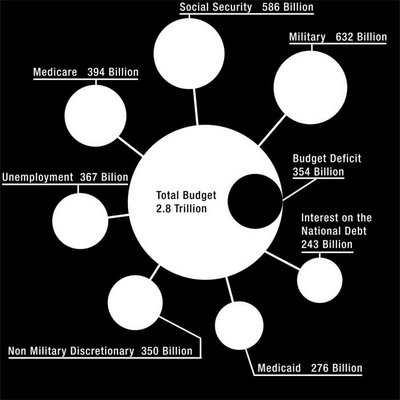 Yes, the only two certainties in life are these for Americans. Of course if you're in the marjority in sub-Saharan Africa, your two certainties would be death and poverty, so I'll consider myself fortunate.
For most U.S. citizens, October 16, 2006, was just another pretty fall day... or a chilly, rainy one if you live in metro Atlanta. For procrastinators like me, though, it held special significance because it is today that 2005 taxes are due.
As someone with an accounting degree, I feel a compulsion to be actively involved in this annual rite. In total, I probably spent ~ 30 hours working on taxes. This year was good--I guessed correctly back in April when I didn't submit a check to the IRS along with my extension. So I'll get some pocket change back within the next 6-8 weeks after they go through my 40+ page return (things get complicated when you own a business).
I have a young, impressionable friend from my former North Point community group who is crazy for Neal Boortz's Fair Tax idea. He probably would have been equally excited about Steve Forbes' Flat Tax plan had he been old enough to vote back in 1996 & again in 2000 when Forbes had this as the basis for his platform in his failed attempts to capture the Republican nomination for President. Here was my response to my friend's request to "run out, buy the book (Boortz's Fair Tax), and get on board":
As long as they're not oppressive, people don't really give a shit about making tax simple or fair. They're more interested in good schools, clean air, cheap gas, homeland security, and who Paris Hilton slept with last night. But that's not the main reason I think it's a pipe dream. The reality is that tens of thousands of individuals have a vested interest in keeping our tax structure incomprehensible: accountants, auditors, tax preparers, attorneys, software developers, and a huge branch of the government--the IRS, just to name a few.This friend was floored when I told him that the Fair Tax plan will never see the light of day through any legislative action. The problem with ideas like the fair or flat tax is that they're rational. Huh? Yes, the fundamental problem with a simplified "fair" or flat tax plan is that it's rational.
I give unto Caesar what is Caesar's, but not a penny more. Not including FICA or Medicare, last year I paid 8% of gross income in federal income tax. I fall into the 28% tax bracket. Why the disparity? Ignorance is expensive, so I got an accounting degree with a concentration in tax. I have a better understanding of tax law than most.
Government isn't about rational. Government is about power, control, and influence.
And with 60% of taxpayers using a professional to prepare their returns, it's only getting more complicated.


